Can Psychiatric Service Dogs Help Veterans with PTSD? What the Research Actually Shows
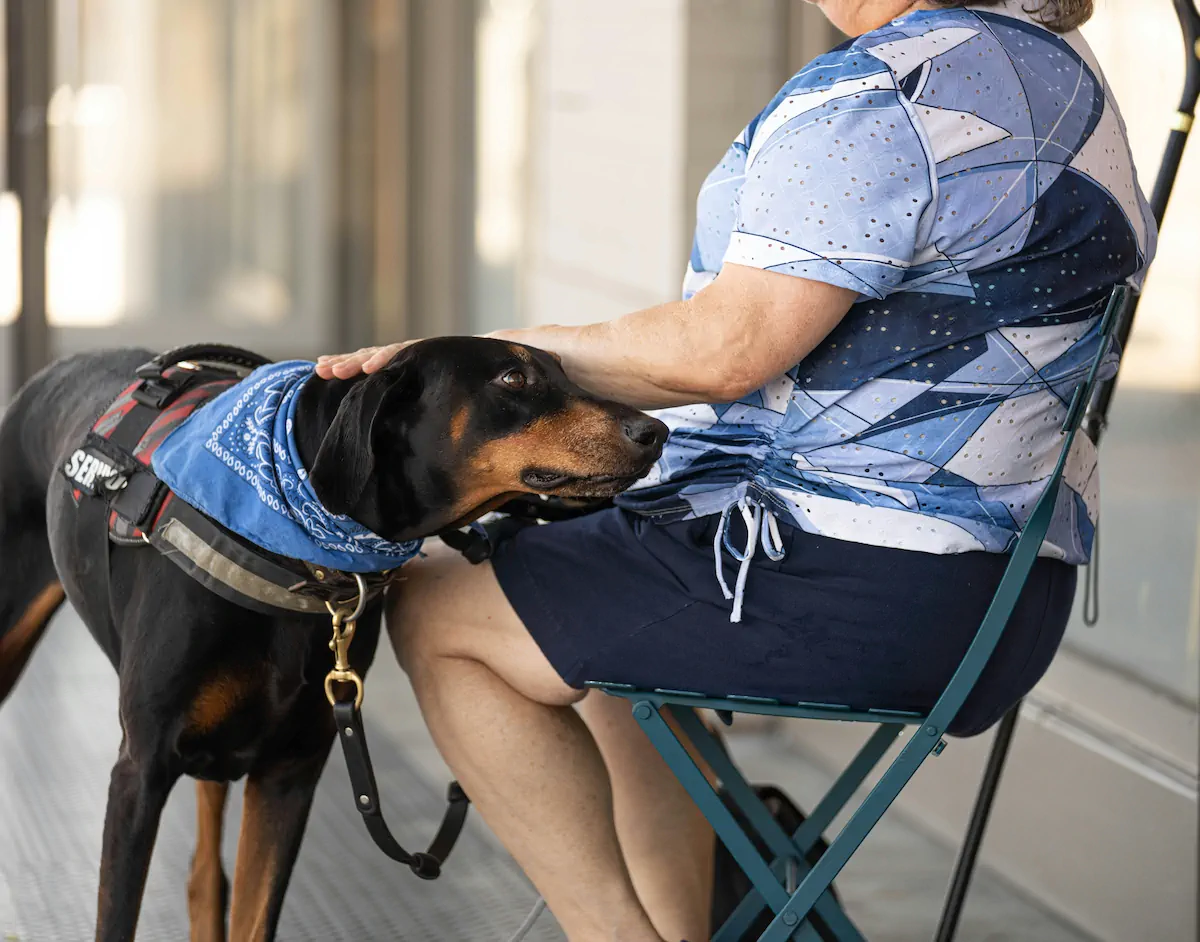
For many veterans, PTSD does not look the way movies portray it. Sometimes it is hypervigilance in a grocery store. Sometimes it is interrupted sleep, social withdrawal, anxiety in crowded spaces, or feeling exhausted from being constantly on alert.
And sometimes recovery begins with something surprisingly simple: a dog placing its head gently against a knee.
The relationship between veterans and service dogs often gets talked about in emotional terms—and for good reason. The bond is real. But in recent years researchers have also begun asking a practical question:
Can psychiatric service dogs measurably help veterans living with PTSD?
The answer emerging from research is increasingly encouraging.
Recent studies found that veterans partnered with trained service dogs experienced lower PTSD symptom severity, lower anxiety and depression, and improved social well-being compared with veterans still waiting for a dog. Researchers also reported significantly lower odds of a PTSD diagnosis among veterans partnered with trained service dogs.
That matters because healing from trauma is rarely about one dramatic moment. More often, it comes from small interruptions in isolation and stress.
What Makes a Psychiatric Service Dog Different?
Psychiatric service dogs are not emotional support animals and they are not simply pets providing comfort.
They are specifically trained to perform tasks that reduce the effects of a psychiatric disability.
For veterans with PTSD, these tasks can include:
- Interrupting panic responses
- Waking handlers from nightmares
- Creating physical space in crowded environments
- Providing grounding during flashbacks
- Recognizing changes in stress patterns
- Encouraging routine and movement
The distinction matters because PTSD often affects everyday functioning—not just emotions.
A trained task can transform a difficult moment into a manageable one.
Why Service Dogs May Help Trauma Recovery
PTSD can convince people that the world is unsafe and unpredictable.
Dogs naturally thrive on routine.
Daily walks happen whether motivation feels present or not. Meals still need preparation. Sleep routines become more structured.
That consistency can create something many trauma survivors describe as missing: stability.
Researchers studying veterans and service dogs have increasingly found benefits extending beyond symptom reduction alone, including improved emotional well-being and quality of life.
A Service Dog Is Not a Replacement for Treatment
This is important.
Psychiatric service dogs are not cures.
They are tools.
The strongest outcomes often happen when service dogs exist alongside counseling, peer support, medical care, and healthy routines.
Trauma recovery usually works best as a layered process rather than a single intervention.
There is no weakness in needing multiple forms of support.
FAQ
Can any dog become a PTSD service dog?
Not every dog has the temperament, health, and training needed for service work.
Are psychiatric service dogs emotional support animals?
No. Service dogs perform trained tasks connected to a disability.
Do service dogs cure PTSD?
No. They can become part of a broader treatment and recovery approach.
Conclusion
Recovery often begins with small moments of safety repeated over time. For many veterans, a service dog becomes part of that process—not because the dog fixes trauma, but because connection creates space for healing.