What Makes a Good Psychiatric Service Dog? Traits That Matter Most
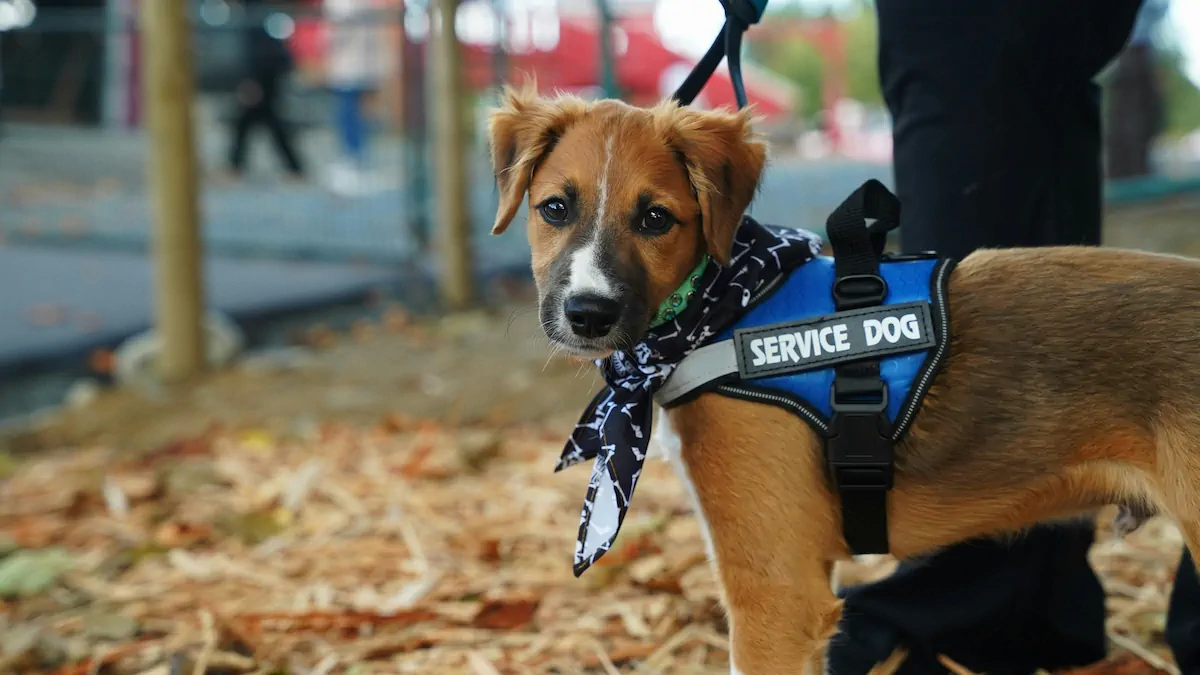
Not every good dog is suited for service work.
That reality can disappoint people who deeply love their pets, but psychiatric service work requires a very specific combination of temperament, stability, confidence, and training ability.
The best psychiatric service dogs are not necessarily the smartest dogs in the room.
They are the dogs who can remain calm, reliable, attentive, and emotionally steady in unpredictable environments.
For veterans and individuals living with PTSD, anxiety disorders, or trauma-related conditions, that consistency matters.
Temperament Comes Before Training
Training matters, but temperament matters first.
A dog can learn commands, but core personality traits strongly influence whether the dog can safely and confidently handle public access work and emotional support tasks.
Strong psychiatric service dog candidates often show:
- Calm behavior around people
- Low reactivity to noise and movement
- Confidence in unfamiliar environments
- Ability to recover quickly from stress
- Strong focus on handlers
- Emotional steadiness
- Willingness to work cooperatively
Dogs that startle easily, become overwhelmed in busy spaces, or show significant fear responses may struggle with the demands of service work.
Emotional Stability Is Critical
Psychiatric service dogs often work in emotionally intense situations.
They may respond to panic attacks, grounding tasks, nightmares, crowd anxiety, dissociation episodes, or emotional distress.
Because of that, emotional stability is one of the most important traits a service dog can have.
The dog must be able to remain regulated while the handler is dysregulated.
That does not mean the dog is emotionless. It means the dog can stay focused without becoming fearful or reactive.
Trainability and Focus
Successful service dogs usually enjoy learning.
They tend to respond well to structured routines, positive reinforcement, and consistent communication.
Strong focus is especially important because psychiatric service dogs often need to notice subtle behavioral or physiological changes in their handlers.
Some dogs naturally pay close attention to human body language, breathing patterns, or emotional shifts.
That attentiveness can become incredibly valuable during task training.
Public Access Confidence
Psychiatric service dogs must function safely in public settings.
That includes environments such as:
- Grocery stores
- Airports
- Medical offices
- Restaurants
- Crowded sidewalks
- Public transportation
- Waiting rooms
A good candidate can move through these spaces calmly without excessive fear, excitement, or distraction.
Public access training takes time, but natural confidence helps significantly.
Breed Matters Less Than People Think
Some breeds are commonly selected for service work because of predictable temperaments and trainability.
Labrador Retrievers, Golden Retrievers, and Standard Poodles are often strong candidates.
However, breed alone never guarantees success.
Individual temperament matters far more.
A stable mixed-breed dog may outperform a poorly suited purebred dog in service training.
At the same time, not every breed is ideal for psychiatric service work. Dogs with extremely high prey drive, intense guarding instincts, or chronic anxiety may face additional challenges.
What Disqualifies a Dog From Service Work?
Not every dog enjoys public-facing work.
Some dogs are happiest as beloved pets rather than working animals.
Common reasons a dog may wash out of service training include:
- Fearfulness
- Aggression
- Noise sensitivity
- High environmental stress
- Inability to focus
- Severe separation anxiety
- Reactivity toward dogs or people
- Poor recovery after startling events
Washouts are not failures.
Sometimes a dog is simply better suited for another lifestyle.
The Human-Dog Relationship Matters Too
A psychiatric service dog partnership depends heavily on trust.
Handlers and dogs spend enormous amounts of time together, often navigating stressful situations as a team.
The strongest partnerships usually involve:
- Consistency
- Clear communication
- Respect for the dog’s well-being
- Structured routines
- Ongoing training reinforcement
- Emotional connection without unrealistic expectations
A service dog is highly trained, but still a living animal with physical and emotional needs.
FAQ
What breeds make the best psychiatric service dogs?
Labrador Retrievers, Golden Retrievers, and Standard Poodles are commonly successful due to trainability and stable temperaments, though many individual dogs from various breeds can succeed.
Can any dog become a psychiatric service dog?
No. Service work requires specific temperament traits, emotional stability, and extensive training.
How are psychiatric service dogs trained?
Training typically includes obedience, public access skills, task work, environmental exposure, and handler-specific support tasks.
Do psychiatric service dogs need certification?
The ADA does not require national certification, but legitimate service dogs must be trained to perform disability-related tasks and behave appropriately in public.